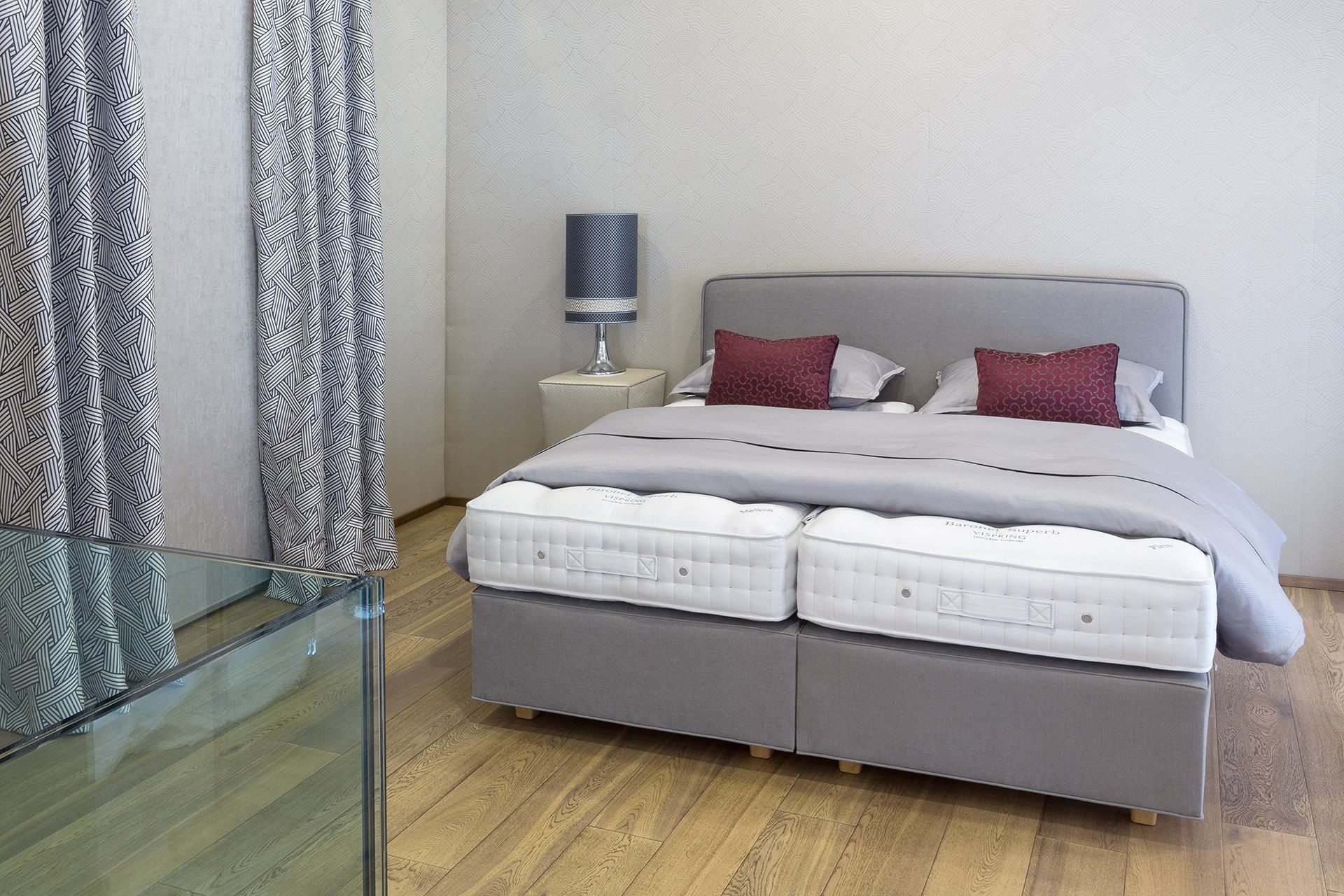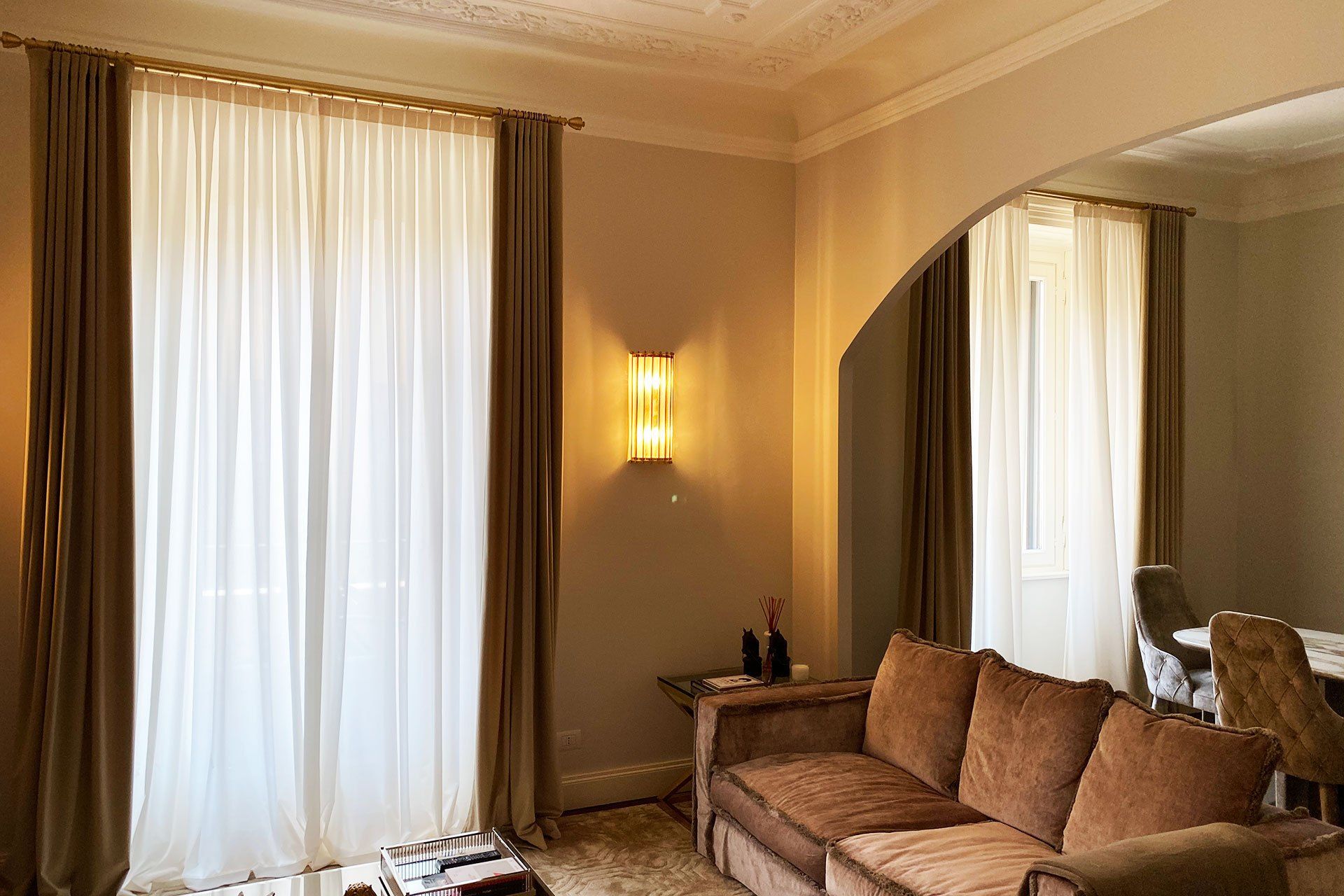
In Milan’s period homes, curtains do a job they do nowhere else: they shape the room. With ceilings that often rise above three and a half metres, tall narrow windows, cornices and plasterwork, the wrong curtain makes a room feel shorter; the right one lifts it.
We have been doing this work for more than sixty years, in apartments in Brera and Magenta as well as in villas outside the city. Here is where we begin.
The room first, then the fabric
A curtain is designed by looking at three things: light, architecture and use.
- Light: which side it comes from, how much of it you want to filter, whether the room is a bedroom or a drawing room.
- Architecture: ceiling height, cornices, plasterwork, roller-shutter boxes, interior shutters, radiators beneath the window.
- Use: curtains to be drawn open and closed every day, or “dress” curtains that barely move.
Where to fix it and how long to make it
In tall rooms it almost always pays to fix the track or pole above the window, towards the ceiling. A full-height curtain lengthens the wall and makes the window look larger.
The length is a matter of style:
- just touching the floor, the cleanest look and the easiest to live with;
- slightly raised, practical where floors are washed often;
- puddled, with a few centimetres of fabric resting on the floor: softer, more classic.
When the ceiling has plasterwork or cornices, the fixing is planned so as not to touch them: on the wall with purpose-made brackets, or within the window recess.
Heading: gathers, pleats, wave
The heading decides how a curtain falls.
- Classic pleats (double or triple): orderly and elegant, suited to formal drawing rooms.
- Gathered: softer and more relaxed.
- Wave: regular, continuous folds that glide on technical tracks such as those by Silent Gliss. It is the most contemporary choice, and it works beautifully in period homes too.
Layers and fabrics
The finest windows often have two layers: a voile or a light linen that filters the light, and a heavier curtain that shuts it out. The curtain can be lined, blackout or thermal.
When choosing the fabric, light and upkeep matter. Linens and linen-wool blends are natural and luminous. Velvets bring weight and warmth. Silks are magnificent but suffer in the sun: they should always be lined and protected. In our library you will find collections from houses such as Dedar, Loro Piana, Pierre Frey, Rubelli and Kvadrat.
Poles, tracks and motorisation
A pole is a decorative element: it is on show, and should be chosen like a piece of furniture. A track disappears and lets the fabric speak. For tall or hard-to-reach windows, motorisation is more than a comfort: it lets you open and close heavy curtains without pulling on them.
How we work
- Home visit and survey, with the measurements taken by us.
- Fabric sampling in the light of your own room.
- Making up in our Milan workshop.
- Fitting, with tracks and poles installed by our own fitters.
You can see some of our work in our projects, for example the apartment in Brera and the classic villa in Milan. Curtain styles, systems and outdoor awnings are on our upholstery and curtains page.